
The Geographic Canvas: Uganda's Landscape and Its Influence on Kingdoms
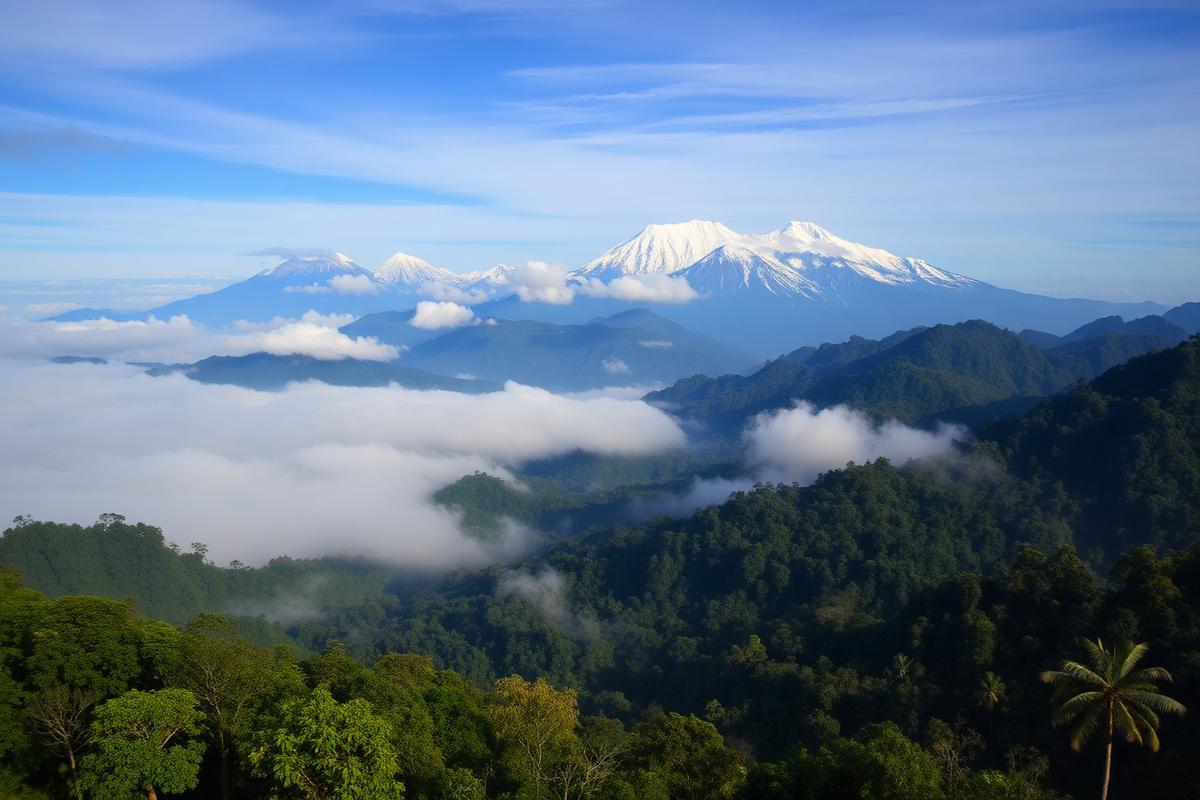
Uganda occupies a pivotal position in the geography of eastern Africa, straddling the equator between the Eastern and Western branches of the Great Rift Valley. This location has endowed the country with extraordinary ecological diversity — from the snow-capped Rwenzori Mountains (5,109 metres) in the west to the arid Karamoja plains in the northeast, and from the vast waters of Lake Victoria in the southeast to the papyrus swamps of Lake Kyoga in the centre.
This geographic diversity directly shaped the political geography of pre-colonial Uganda. The fertile, banana-growing regions around Lake Victoria — receiving reliable rainfall of 1,200–1,500 mm annually — supported the dense populations and centralised governance structures of Buganda and Busoga. The drier, pastoralist rangelands of western Uganda gave rise to the cattle-based kingdoms of Ankole and the Hima-Iru social system. The forested mountains of the Rwenzori and Virunga ranges sheltered the Bakonzo and Bamba peoples, whose political structures were more decentralised.
The interlacustrine region — the area between the great lakes of Victoria, Albert, Edward, and Kyoga — was one of the most politically complex zones in pre-colonial Africa, supporting multiple kingdoms and chieftaincies that interacted through diplomacy, warfare, trade, and intermarriage.
Winston Churchill, visiting in 1907, famously described Uganda as "the Pearl of Africa" — a phrase that, whatever its colonial connotations, accurately captured the country's exceptional natural endowment.
Did You Know?
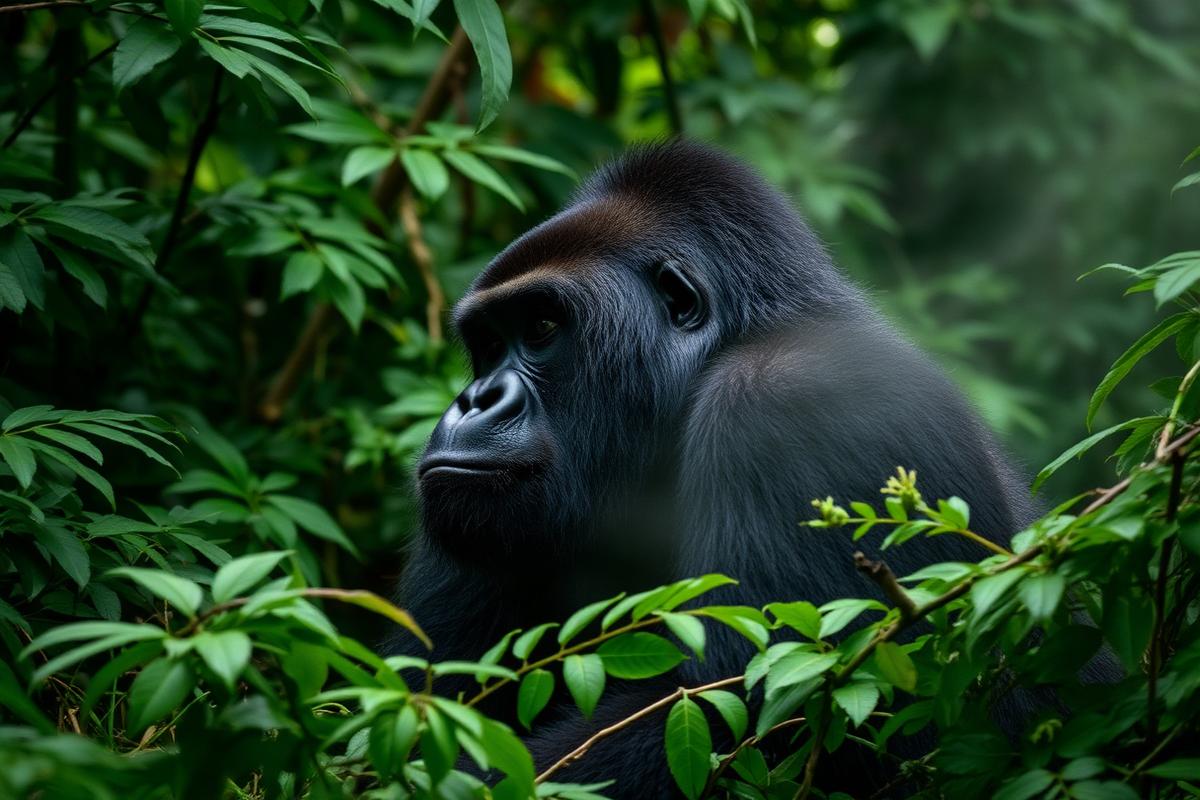
Uganda is one of only three countries in the world where you can see mountain gorillas in the wild, and the only country where you can also trek chimpanzees, see the Big Five on safari, and view the source of the Nile — all within a single nation.
The Kitara Empire: Origins of Political Centralisation
The earliest known centralised political structure in the Great Lakes region was the Kitara Empire (also known as the Empire of Kitara or Bacwezi Empire), which oral traditions place at approximately the 13th to 15th centuries CE. Kitara is believed to have encompassed a vast territory covering parts of present-day Uganda, the eastern Democratic Republic of the Congo, Rwanda, Burundi, and western Tanzania.
The Kitara Empire is associated with the Bacwezi (Chwezi) dynasty — semi-legendary figures who feature prominently in the oral histories of multiple Great Lakes peoples. The Bacwezi are credited with introducing centralised governance, ironworking, cattle management, and elaborate spiritual practices to the region. Archaeological evidence from sites such as Bigo bya Mugenyi (a massive earthwork enclosure in western Uganda covering approximately 300 hectares) and Ntusi (a large settlement site) confirms the existence of a complex, hierarchically organised society in the region during this period.
The collapse of the Kitara Empire — attributed in oral traditions to internal succession disputes and the arrival of Luo-speaking Bito clans from the north — gave rise to the successor kingdoms that would shape Uganda's political landscape for the next five centuries:
- Bunyoro-Kitara — the direct heir to Kitara, maintaining control over western Uganda
- Buganda — initially a small chieftaincy that would grow to become the dominant power in the region
- Toro — a breakaway kingdom from Bunyoro, established in the 19th century
- Ankole — a Hima-dominated pastoral kingdom in southwestern Uganda
- Busoga — a confederation of chieftaincies east of the Nile
Key Takeaways
- •The Kitara Empire was the earliest known centralised polity in the Great Lakes region (13th–15th century).
- •The Bacwezi dynasty introduced centralised governance, ironworking, and cattle management.
- •Archaeological sites like Bigo bya Mugenyi confirm complex pre-colonial societies.
- •Kitara's collapse gave rise to the successor kingdoms of Bunyoro, Buganda, Toro, Ankole, and Busoga.
The Kingdom of Buganda: Power, Governance, and Innovation
Buganda, centred on the northern shores of Lake Victoria with its capital at Mengo Hill in present-day Kampala, grew from a minor chieftaincy in the 14th century to become the dominant political power in the Great Lakes region by the 19th century. By the time European explorers arrived in the 1860s, Buganda was a sophisticated centralised state with an estimated population of 1–3 million people.
The Buganda political system was remarkably advanced for its time. The kingdom was governed by the Kabaka (king), who held executive power but was not an absolute monarch. The Kabaka's authority was checked by the Lukiiko (parliament), a deliberative body comprising clan heads, territorial chiefs, and appointed officials. The Prime Minister (Katikkiro) served as the head of government, while the Nnamasole (Queen Mother) and the Lubuga (the Kabaka's official sister) held constitutionally significant roles.
Buganda's territory was divided into approximately ten ssaza (counties), each administered by a chief appointed by the Kabaka — notably, not by hereditary right but by merit and royal favour. This system of appointed, non-hereditary administration gave the Kabaka considerable flexibility in managing political competition and rewarding loyalty. It was, in essence, a proto-bureaucratic system that distinguished Buganda from many neighbouring polities where chiefs inherited their positions.
The Buganda clan system is built on patrilineal clans — 52 are officially recognised by the kingdom today — each with its own totem, functions, and responsibilities within the kingdom. The Kabaka was required to select his queen from a different clan than his own, ensuring cross-clan alliances and preventing the concentration of power within a single lineage.
Buganda's economic power rested on its control of Lake Victoria's trade routes, its productive banana-based agriculture, and its strategic position as an intermediary in the long-distance trade networks connecting the East African coast with the interior. Barkcloth production (from the Ficus natalensis tree) was a major industry, and Buganda barkcloth — known as olubugo — was recognised by UNESCO as an Intangible Cultural Heritage in 2008.
Buganda Kingdom — Key Facts
- Founded
- ~14th century CE
- Capital
- Mengo Hill, Kampala
- Head of State
- Kabaka (King)
- Parliament
- Lukiiko (legislative body)
- Clans
- 52 recognised clans
- UNESCO Heritage
- Kasubi Tombs (2001)
Ready to plan your East Africa trip?
Let our experts craft your perfect itinerary based on your interests.
The Kasubi Tombs: UNESCO World Heritage and Sacred Space
The Kasubi Tombs (Ssekabaka's Tombs), located on Kasubi Hill in Kampala, are the burial grounds of the Kabakas (kings) of Buganda and were inscribed as a UNESCO World Heritage Site in 2001. The site is the most significant cultural and spiritual landmark in Uganda and one of the most important royal burial sites in sub-Saharan Africa.
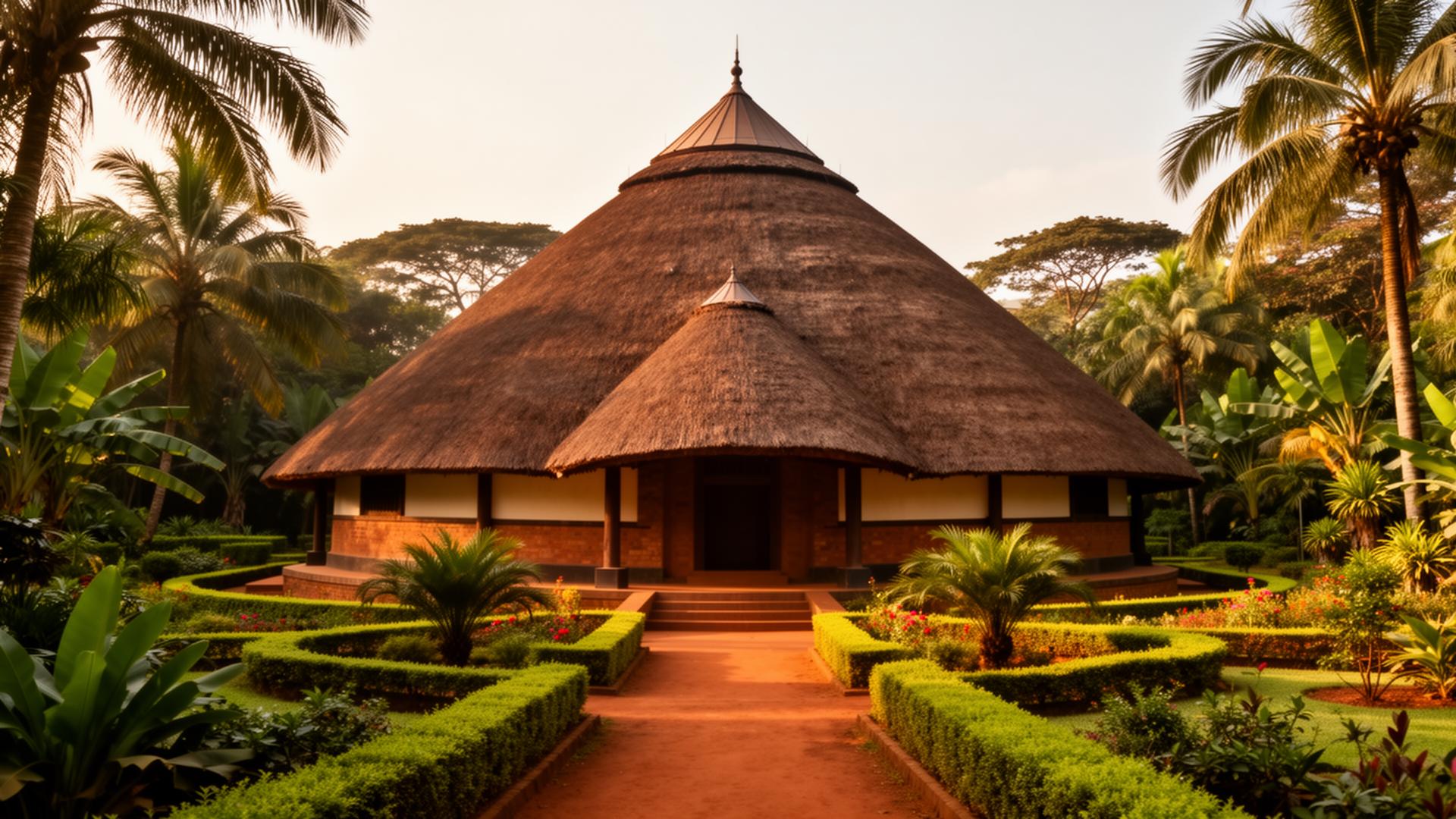
The main building, the Muzibu-Azaala-Mpanga, was one of the largest structures in East Africa built entirely of organic materials — wood, thatch, reed, and wattle. It served as both the tomb of four Kabakas (Mutesa I, Mwanga II, Daudi Chwa II, and Mutesa II) and an active royal palace and spiritual centre.
On 16 March 2010, a devastating fire destroyed the Muzibu-Azaala-Mpanga. The cause of the fire remains disputed, and the event provoked significant public grief and political tension. UNESCO placed the site on its List of World Heritage in Danger. Reconstruction efforts, led by the Buganda Kingdom government in partnership with the Ugandan national government and international organisations, have been ongoing, using traditional building techniques and materials.
The Kasubi Tombs represent more than an architectural achievement. They embody the Ganda concept of kingship, in which the deceased Kabaka is believed to continue to influence the affairs of the living through spiritual intermediaries. The tombs are tended by a hereditary group of caretakers (the Balongo), and access to certain areas is restricted by protocols that have been maintained for generations.
For visitors, the Kasubi Tombs provide the most accessible introduction to Buganda's cultural and political history. Guided tours explain the kingdom's governance system, the significance of the clan system, and the role of the monarchy in contemporary Ugandan society.
Did You Know?
The Kasubi Tombs are not merely a museum — they remain an active spiritual site where ceremonies are conducted and where the reigning Kabaka (currently Kabaka Ronald Muwenda Mutebi II, enthroned in 1993) maintains a connection with his predecessors.
Bunyoro, Ankole, and Toro: The Western Kingdoms
Bunyoro-Kitara, the direct successor to the ancient Kitara Empire, was once the most powerful kingdom in the Great Lakes region. At its height in the 17th and 18th centuries, Bunyoro controlled a territory stretching from Lake Albert to Lake Kyoga and from the Rwenzori Mountains to the borders of Buganda. The kingdom was governed by the Omukama (king) and maintained its legitimacy through its claimed descent from the Bacwezi dynasty.
Bunyoro's decline was closely linked to the rise of Buganda, which progressively encroached on Bunyoro territory from the late 18th century onward. The arrival of British colonial power in the 1890s further weakened Bunyoro, as the British allied with Buganda against Bunyoro in a series of conflicts. The 1894 Bunyoro Agreement stripped the kingdom of significant territory, including the so-called "Lost Counties" that were transferred to Buganda — a grievance that would simmer for decades and was only partially resolved by a 1964 referendum.
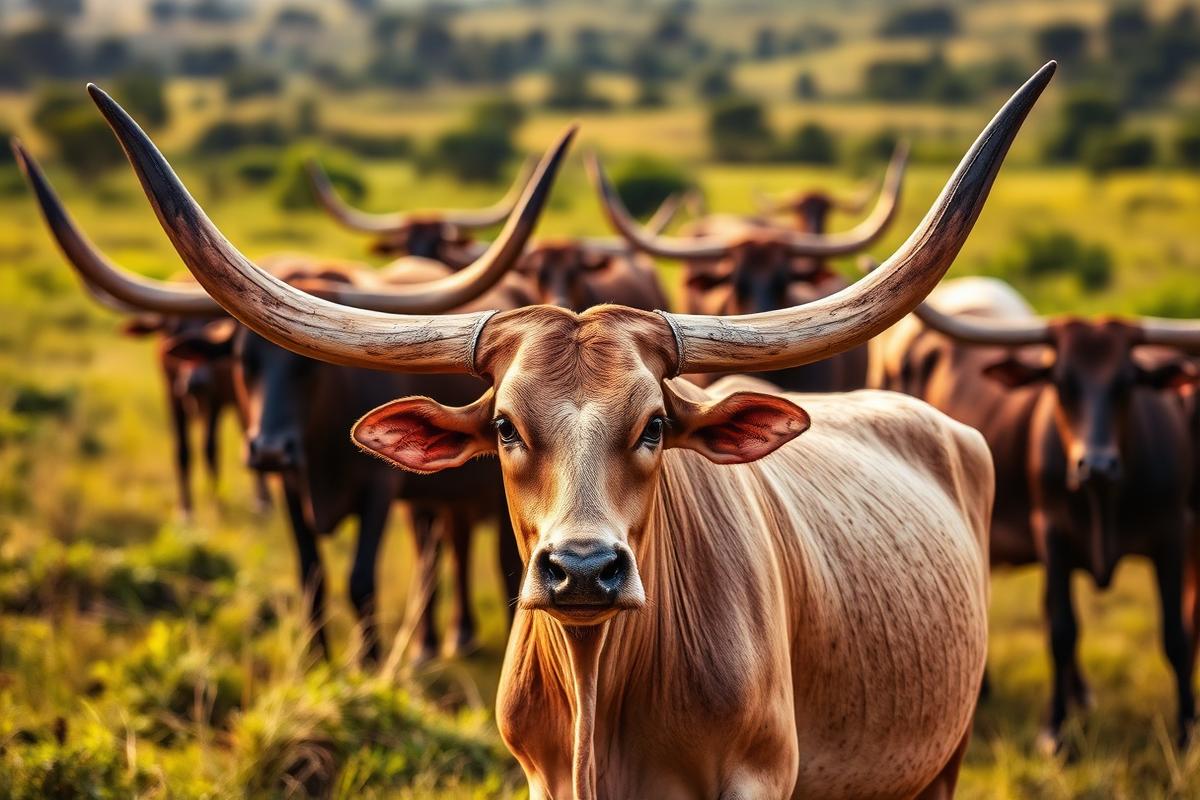
The Kingdom of Ankole (Nkore) in southwestern Uganda was characterised by a distinctive social structure based on the relationship between two groups: the Bahima (pastoralists) and the Bairu (agriculturalists). The Bahima elite controlled political power and the iconic Ankole long-horned cattle — animals with dramatic curved horns that can span over two metres — while the Bairu cultivated crops and provided agricultural tribute. The Ankole long-horned cattle breed is not merely an economic asset but a deeply embedded cultural symbol, central to poetry, courtship rituals, and social prestige.
The Kingdom of Toro was established in 1830 when Prince Kaboyo Olimi I, a son of the Omukama of Bunyoro, declared independence and established his own kingdom in the Rwenzori foothills. Toro developed a distinct identity, centred on the town of Fort Portal and the spectacular crater lakes of the Rwenzori foothills. The current Omukama, King Oyo Nyimba Kabamba Iguru Rukidi IV, ascended to the throne in 1995 at the age of three, making him one of the world's youngest reigning monarchs at the time.
Key Takeaways
- •Bunyoro-Kitara was once the most powerful kingdom in the Great Lakes, claiming descent from the Bacwezi.
- •Ankole's social structure was built on the Bahima-Bairu pastoralist-agriculturalist relationship.
- •Toro was established in 1830 as a breakaway from Bunyoro.
- •The 'Lost Counties' dispute between Bunyoro and Buganda shaped post-independence politics.
Busoga and Rwenzururu: The Eastern Kingdom and the Mountain Kingdom
Busoga lies east of the Nile, between Lake Victoria and Lake Kyoga, with Jinja as its best-known town. Unlike Buganda's single centralised throne, Busoga grew from a group of smaller chiefdoms — commonly counted as eleven — whose hereditary rulers came together under a paramount ruler, the Kyabazinga. The title was formalised under colonial rule in the early 20th century and restored with the other kingdoms in the 1990s. Today the Kyabazinga presides over a cultural institution that promotes the Lusoga language, clan heritage and community development.
For visitors, Busoga is the gateway to the Source of the Nile at Jinja, where the river leaves Lake Victoria on its journey north. Many travellers pass through without realising they are in a kingdom with its own royal history; a local guide can add that layer to a Jinja stop.
Rwenzururu, the kingdom of the Bakonzo people in the Rwenzori Mountains, has a very different story. It began as a movement in the 1960s, when Bakonzo and Bamba communities sought self-rule from the Toro kingdom. After decades of struggle, the Ugandan government formally recognised Rwenzururu as a cultural institution in 2009, making it the newest of Uganda's recognised kingdoms. Its king carries the title Omusinga.
Rwenzururu is a reminder that Uganda's kingdoms are not frozen relics. Their boundaries, recognition and roles are still debated and still changing.
Key Takeaways
- •Busoga is a union of smaller chiefdoms led by a paramount ruler, the Kyabazinga.
- •Jinja and the Source of the Nile sit within Busoga.
- •Rwenzururu, the Bakonzo kingdom of the Rwenzori Mountains, was recognised in 2009.
Ready to plan your East Africa trip?
Let our experts craft your perfect itinerary based on your interests.
Royal Titles and Institutions at a Glance
Each kingdom has its own names for its ruler and its institutions. Knowing them helps when reading signs at royal sites or listening to a guide.
- Buganda — ruler: Kabaka; parliament: Lukiiko, which sits at the Bulange building in Mengo; prime minister: Katikkiro
- Bunyoro-Kitara — ruler: Omukama; palace at Hoima; coronation anniversary: Empango
- Toro — ruler: Omukama; palace on Kabarole hill above Fort Portal
- Busoga — paramount ruler: Kyabazinga
- Rwenzururu — ruler: Omusinga
- Ankole (historic) — ruler: Omugabe; not restored
Ruler Titles
- Buganda
- Kabaka
- Bunyoro
- Omukama
- Toro
- Omukama
- Busoga
- Kyabazinga
- Rwenzururu
- Omusinga
- Ankole (historic)
- Omugabe
Colonial Period, Abolition, and Restoration
The arrival of British colonialism in the 1890s fundamentally altered the political landscape of Uganda. The 1900 Buganda Agreement — a treaty between the British Crown and the regents of the young Kabaka Daudi Chwa II — formalized Buganda's special status within the colonial Protectorate of Uganda, granting the kingdom significant internal autonomy, a land distribution system (mailo land), and a privileged position relative to other kingdoms.
The colonial period saw the gradual erosion of the other kingdoms' autonomy, although their institutional structures were maintained as instruments of indirect rule. The British appointed or confirmed traditional rulers, but increasingly subordinated them to colonial district commissioners.
At independence in 1962, Uganda's constitution established a complex federal structure that accommodated the traditional kingdoms. The first president of Uganda was Mutesa II, the Kabaka of Buganda, who served as head of state while Milton Obote served as prime minister. This arrangement proved unstable, and in 1966 Obote ordered an attack on the Buganda royal palace (the Lubiri), forcing Mutesa II into exile in London, where he died in 1969 under disputed circumstances.
In 1967, Obote's government abolished all traditional kingdoms through a constitutional amendment, declaring Uganda a republic with no role for traditional monarchies. This abolition lasted for over 25 years, through the Idi Amin era (1971–1979) and the subsequent instability.
In 1993, President Yoweri Museveni's government restored the traditional kingdoms as cultural institutions — recognizing their cultural and ceremonial significance while stripping them of formal political or administrative authority. This restoration reflected a pragmatic compromise: the kingdoms provide cultural identity and social cohesion for their communities while operating within the framework of the unitary national government. The restoration was broadly welcomed, although debates continue about the appropriate role of traditional institutions in a modern democratic state.
Did You Know?
Uganda's first president, Mutesa II, was simultaneously the Kabaka (king) of Buganda — making Uganda one of the few nations in the world where a traditional monarch served as the head of a modern democratic state at independence.
Living Heritage: Kingdoms in Contemporary Uganda
Today, Uganda's traditional kingdoms function as vibrant cultural institutions that play a significant role in community identity, cultural preservation, and social welfare — even without formal political power.
The Kabaka of Buganda (currently Ronald Muwenda Mutebi II, crowned in 1993) remains an influential figure in Ugandan public life. The Buganda Kingdom government operates cultural institutions, manages royal properties (including the Kasubi Tombs and the Lubiri Palace), and organises annual cultural events and ceremonies. The kingdom's annual Buganda Expo showcases traditional arts, crafts, music, and cuisine.
Barkcloth making (olubugo), centred in the Buganda region, was inscribed on UNESCO's Representative List of the Intangible Cultural Heritage of Humanity in 2008. The craft involves harvesting the inner bark of the Ficus natalensis (mutuba) tree and beating it with wooden mallets into a soft, terracotta-coloured textile. Historically used for royal coronation garments and burial shrouds, barkcloth is now also used for contemporary fashion and home décor.
Traditional music and dance remain central to cultural expression across all kingdoms. The Buganda royal drums (engalabi, empuunyi, mbuutu), the Acholi larakaraka dance, the Bagisu imbalu circumcision ceremonies, and the Ankole ekitaguriro cattle praise songs all represent living traditions that connect contemporary Ugandans with their pre-colonial heritage.
For travellers, Uganda's kingdoms offer cultural tourism experiences that go far beyond the typical museum visit. Visitors can attend royal ceremonies, participate in traditional craft workshops, meet clan elders, and gain insights into governance systems that predate European contact by centuries. The most accessible experiences include:
- Visiting the Kasubi Tombs in Kampala (UNESCO World Heritage Site)
- Exploring the Buganda Royal Palace (Lubiri) on Mengo Hill
- Attending the Empango (coronation anniversary) ceremony in Bunyoro
- Visiting the Toro Royal Palace and crater lakes near Fort Portal
- Experiencing Ankole cattle culture in the western rangelands
Key Takeaways
- •Buganda barkcloth (olubugo) was inscribed as UNESCO Intangible Cultural Heritage in 2008.
- •The Kabaka of Buganda remains an influential cultural figure in modern Uganda.
- •Visitors can attend royal ceremonies and traditional craft workshops across multiple kingdoms.
- •Cultural tourism provides direct economic benefits to traditional communities.
Faith, Kingship and the Uganda Martyrs
The arrival of Arab traders in the 1840s and of Christian missionaries in the late 1870s brought new religions to the Buganda court. Converts among the Kabaka's pages and officials soon faced a conflict between their new faith and loyalty to the king.
Between 1885 and 1887, during the reign of Kabaka Mwanga II, dozens of Christian converts — Catholic and Anglican — were executed. The largest single killing took place at Namugongo, east of Kampala, on 3 June 1886. The Catholic martyrs were canonised by Pope Paul VI in 1964.
Today Martyrs' Day, 3 June, is a public holiday in Uganda. Pilgrims walk to Namugongo from across Uganda and neighbouring countries, many on foot for days, making it one of the largest religious gatherings in Africa. The Catholic and Anglican shrines at Namugongo can be visited year-round.
The story matters for understanding Buganda: it shows a powerful court facing outside forces, and the religious divisions that followed shaped the kingdom's politics into the colonial era.
Did You Know?
Martyrs' Day on 3 June draws pilgrims who walk to Namugongo from as far as Kenya, Tanzania and Rwanda.
Visiting Royal and Sacred Sites: Etiquette for Travellers
Royal and sacred sites in Uganda are living places, not just museums. A few simple habits make a visit respectful and more rewarding.
- Dress modestly. At sites such as the Kasubi Tombs, women may be asked to wear a wrap over trousers or short skirts; wraps are often provided at the entrance.
- Remove shoes where asked. Some inner areas of royal shrines are entered barefoot.
- Ask before taking photos, especially of caretakers, ceremonies and elders. Some areas do not allow photography at all.
- Hire the on-site guide. Guides at royal sites are usually members of the community and explain protocols that are not written anywhere.
- Check ceremony dates locally. Coronation anniversaries and kingdom events are announced by each kingdom and can move; confirm with your operator before planning a trip around one.
Cultural visits work best when booked with a local operator who works directly with the communities, so that part of what you pay supports the people keeping these traditions alive.
Planning Your Cultural Heritage Visit to Uganda
Uganda's cultural heritage sites are distributed across the country, and a well-planned itinerary can combine kingdom visits with Uganda's world-class wildlife experiences.
Kampala and Buganda (2–3 days)
Begin in the capital with visits to the Kasubi Tombs, the Lubiri Royal Palace, and the Uganda National Museum. The Ndere Troupe cultural centre offers evening performances of traditional music and dance from across Uganda's ethnic groups. The Kabaka's Lake and Trail provides a pleasant walk through one of the kingdom's sacred sites.Western Uganda Circuit (5–7 days)
Combine Toro Kingdom cultural sites around Fort Portal (including the Royal Palace and the spectacular crater lakes) with chimpanzee trekking in Kibale Forest National Park. Continue to Queen Elizabeth National Park for safari, then south to Bwindi Impenetrable Forest for gorilla trekking. En route, visit Ankole cattle communities in Mbarara district.Bunyoro and Murchison Falls (3–4 days)
Visit the Omukama's Palace at Hoima, explore the historical Bigo bya Mugenyi earthworks (the archaeological remnants of the Kitara Empire), and then proceed to Murchison Falls National Park for dramatic waterfall viewing and Nile boat safaris.Best Time to Visit
Uganda's cultural sites are accessible year-round, though major cultural ceremonies have specific dates. The dry seasons (June–August and December–February) are generally preferred for combined cultural and wildlife itineraries. Gorilla trekking permits should be booked 3–6 months in advance.Uganda Cultural Tourism Essentials
- Entry Visa
- eVisa, $50 USD
- Currency
- Ugandan Shilling (UGX)
- Best Season
- Jun–Aug, Dec–Feb
- Gorilla Permit
- $800 per person
- Languages
- English, Luganda, Swahili
- Capital
- Kampala