
Kenya Safari Guide 2026 — Parks, Lodges, Costs & Itineraries
Jambo and karibu! As a seasoned Kenya safari specialist, I'm thrilled to present your ultimate guide to experiencing the magic of Kenya in 2026. This comprehensive resource is designed to navigate you through the incredible wildlife, breathtaking landscapes, and rich cultures that define a Kenyan safari. From the thunder of the Great Migration to the iconic silhouette of Kilimanjaro, Kenya promises an adventure that will forever be etched in your memory. We'll delve into the premier parks, recommend lodges for every budget, break down costs, and craft itineraries that maximize your wildlife encounters and cultural immersion. Get ready to embark on the journey of a lifetime!
Nairobi: The Gateway to Your Adventure
Nairobi, East Africa’s bustling economic hub, serves as the primary gateway for international visitors to Kenya. Jomo Kenyatta International Airport (JKIA) is well-connected globally, and many safaris begin and end here. While often seen as a transit point, Nairobi offers compelling attractions if you have a day or two to spare.
Must-Do in Nairobi:
- David Sheldrick Wildlife Trust: Witness orphaned elephants being cared for, and learn about their conservation efforts. Feeding times are particularly memorable.
- Giraffe Centre: Get nose-to-nose with Rothschild's giraffes, an endangered species, and even feed them from a raised platform.
- Karen Blixen Museum: Step into the former home of ‘Out of Africa’ author Karen Blixen, offering a glimpse into colonial Kenya.
- Nairobi National Park: Uniquely, a national park – complete with lions, rhinos, and giraffes – borders the city. It’s perfect for a short safari upon arrival or departure.
- Bomas of Kenya: Experience traditional Kenyan culture through dance performances, music, and homesteads representing various tribes.
- Luxury: Hemingways Nairobi, Fairmont The Norfolk, Giraffe Manor (book essential, often months in advance).
- Mid-Range: Sarova Panafric, Villa Rosa Kempinski, Ole Sereni Hotel.
- Budget: The Heron Portico, Palacina The Residence & The Suites, Tamarind Tree Hotel.
The Big Five Checklist: Your Safari Goals
The iconic 'Big Five' – Lion, Leopard, Elephant, Rhino, and Buffalo – are often at the top of every safari-goer's wishlist. While spotting all five is never guaranteed, Kenya offers some of the best chances on the continent.
Where to Find Them:
- Lion: Abundant in Maasai Mara, Samburu, Tsavo, and Amboseli. Look for prides resting under acacia trees or stalking prey in the open plains.
- Leopard: The most elusive. Maasai Mara, Samburu, and Laikipia offer good sightings. Keep an eye on tree branches where they often rest, camouflaged.
- Elephant: Ubiquitous across many parks, particularly large herds in Amboseli, Tsavo, and Maasai Mara. Samburu is known for its unique 'red' elephants.
- Rhino (Black & White): Critically endangered. Ol Pejeta Conservancy is the best place to guarantee sightings of both black and white rhinos, including the last two northern white rhinos. Lake Nakuru and Nairobi National Park also have strong rhino populations.
- Buffalo: Large herds are common in Maasai Mara, Amboseli, and Tsavo. Often seen grazing near water sources.
Kenya's Premier Safari Parks and Reserves
Kenya boasts an incredible array of national parks and reserves, each offering a distinct experience. Choosing the right combination for your itinerary is key to a memorable safari.
Maasai Mara National Reserve & Conservancies
- Overview: Undeniably Kenya's crown jewel, globally renowned for its exceptional wildlife, particularly the Great Migration. The Mara system comprises the National Reserve and surrounding private conservancies.
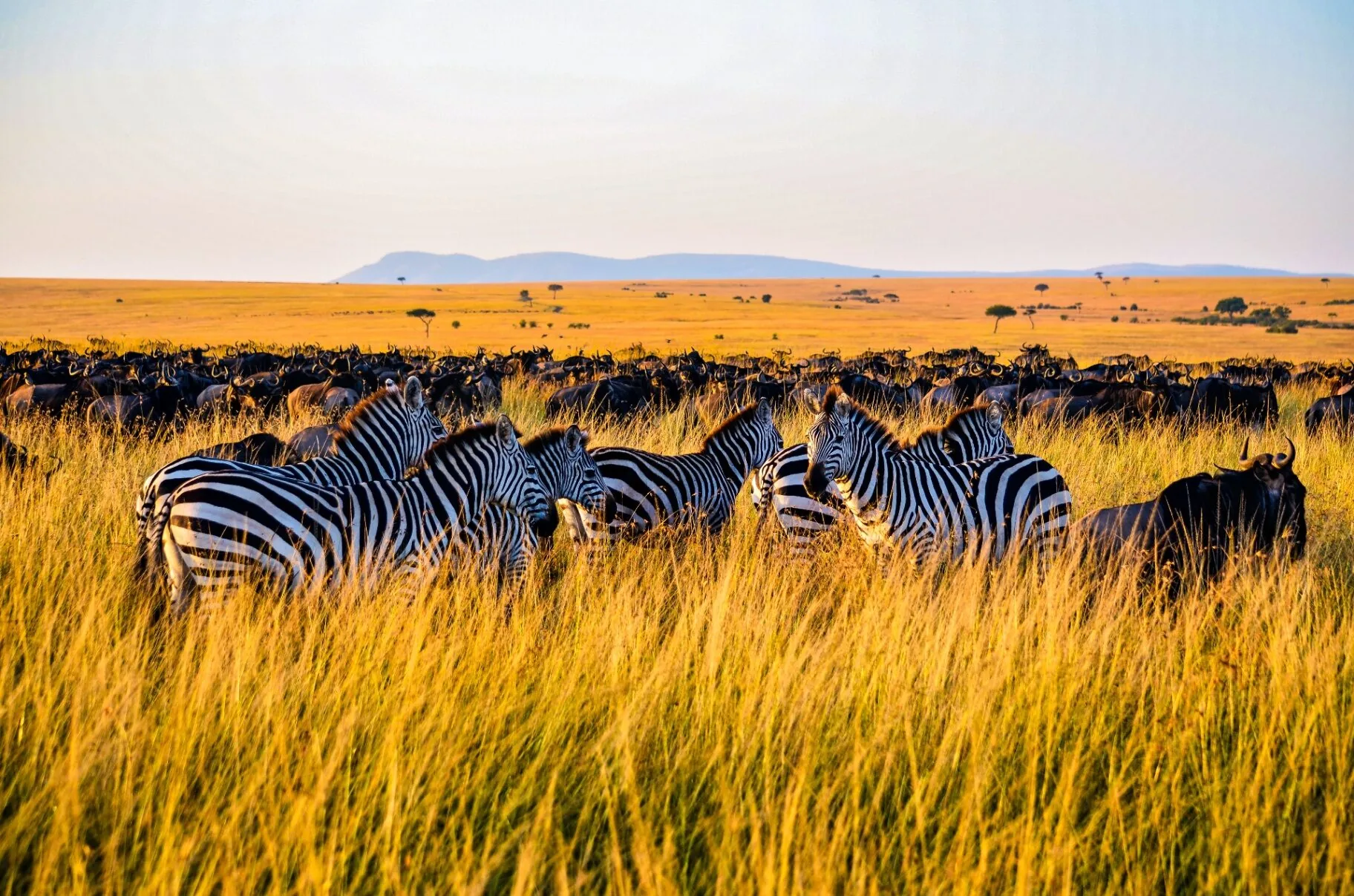
- Wildlife: Unparalleled predator concentrations (lions, leopards, cheetahs), vast herds of wildebeest and zebra (seasonal), elephants, buffalo, diverse birdlife. The 'Big Five' are residents here.
- Conservancies (e.g., Mara North, Olare Motorogi, Naboisho): Offer a more exclusive, less crowded experience than the main reserve. Activities often include night drives, walking safaris, and off-road driving (not permitted in the reserve). They contribute directly to Maasai community landowners.
- Best Time: Year-round excellent. Migration season (July-Oct) for the spectacle, but green season (Nov-May) offers lush landscapes, fewer crowds, and superb birdwatching.
- Why Go: Unmatched wildlife viewing, Great Migration, iconic African landscapes.
Amboseli National Park
- Overview: Famous for its large elephant herds and the iconic backdrop of Mount Kilimanjaro, Africa's highest peak. The park's wetlands attract diverse wildlife.
- Wildlife: Large elephant herds are the main draw, often seen silhouetted against Kili. Also features lions, cheetahs, buffalo, hippos, zebras, giraffes, and over 400 bird species.
- Best Time: Dry season (June-Oct, Dec-Feb) for clear Kilimanjaro views and concentrated wildlife around water sources. Rainy season can obscure Kili views but offers lush scenery.
- Why Go: Mount Kilimanjaro views, stunning elephant photography, easily accessible.
Tsavo East & West National Parks
- Overview: Kenya's largest national parks, often referred to as 'The Land of the Man-Eaters' (from the railway construction era). Tsavo East is flatter, more open, and known for large elephant herds. Tsavo West is more diverse geologically, with hills, volcanic features, and Mzima Springs.
- Wildlife: 'Red' elephants (due to dust bathing in iron-rich soil), lions, leopards, hippos, crocodiles, rhinos (Tsavo West has a sanctuary), buffalo, zebras, giraffes, and diverse birdlife. The sheer size of the parks makes wildlife spotting more challenging but incredibly rewarding.
- Best Time: Dry season (June-Oct, Dec-Feb) as wildlife congregates at waterholes.
- Why Go: Vast, wild landscapes, 'red' elephants, Mzima Springs, less crowded.
Samburu National Reserve
- Overview: Located in the arid northern region, offering a very different landscape and unique 'northern five' species not found further south.
- Wildlife: Known for the 'Samburu Special Five': Grevy's zebra, reticulated giraffe, Beisa oryx, Gerenuk (long-necked antelope), and Somali ostrich. Also home to elephants, lions, leopards, and cheetahs. The Ewaso Nyiro River is a lifeline for wildlife.
- Best Time: Dry season (June-Oct, Dec-Feb) when animals congregate along the river. The harsh beauty is apparent year-round.
- Why Go: Unique wildlife, dramatic arid scenery, cultural interactions with the Samburu people.
Laikipia Plateau
- Overview: A high-altitude plateau with private conservancies and ranches. Not a national park, Laikipia focuses heavily on conservation, community benefits, and unique safari experiences typically found in private concessions.
- Wildlife: Home to Kenya's second-highest density of black rhinos, excellent for wild dogs, Grevy's zebra, reticulated giraffe, elephants, lions, leopards. Offers a mix of savanna, forest, and riverine habitats.
- Activities: Game drives, walking safaris, night drives, horse riding, camel trekking, cultural visits (Maasai, Samburu, Pokot), fly camping, quad biking (lodge-dependent).
- Best Time: Dry season (June-Oct, Dec-Feb) for easier wildlife spotting, but the region is good year-round.
- Why Go: Exclusive, diverse activities, strong conservation focus, superb for rhinos and wild dogs.
Lake Nakuru National Park
- Overview: A 'birdwatcher's paradise' and a critical rhino sanctuary. Famous for its shimmering pink blanket of flamingos historically, though numbers vary due to environmental factors.
- Wildlife: Excellent for rhinos (both black and white), Rothschild's giraffes, waterbucks, buffalo, leopards, and over 400 species of birds, including pelicans and different flamingo species.
- Best Time: Dry season (June-Oct, Dec-Feb) for concentrated wildlife around the lake. Flamingo numbers are seasonal and unpredictable.
- Why Go: Guaranteed rhino sightings, phenomenal birdwatching, unique lake ecosystem.
Ol Pejeta Conservancy
- Overview: A groundbreaking conservancy dedicated to wildlife protection, particularly rhinos. Home to the last two northern white rhinos on Earth and a chimpanzee sanctuary.
- Wildlife: Best place in Kenya for guaranteed rhino sightings (black, white, and the northern white species). Also has the 'Sweetwaters Chimpanzee Sanctuary', lions, leopards, elephants, Grevy's zebra, and various plains game.
- Activities: Game drives, lion tracking, night drives, guided walks, chimpanzee visits, a very popular experience feeding Baraka, a blind black rhino.
- Best Time: Year-round excellent, with steady wildlife populations.
- Why Go: Critical rhino conservation, chimpanzee sanctuary, unique interactive experiences.
Lodge Recommendations by Budget
Choosing the right accommodation significantly enhances your safari experience. Here’s a breakdown by budget, keeping in mind that 'budget' on safari is relative. Prices are per person per night, estimated as of 2026, and highly variable based on season, inclusions, and booking lead time.
Luxury (US$800+ pp/pn):
- Maasai Mara: Angama Mara, Cottar's 1920s Camp, Sala's Camp, Governors' Camp (Main, Moran, Private), and the high-end conservancy camps like Richard's Forest Camp, Rekero Camp. Expect exquisite service, prime locations, gourmet dining, and often private vehicles.
- Amboseli: Tortilis Camp (eco-luxury), Chyulu Hills Bush Camps.
- Samburu: Sasaab Lodge (unique architecture, fantastic views).
- Laikipia: Solio Lodge, Ol Malo, Loisaba Star Beds, Laikipia Wilderness Camp.
- Ol Pejeta: Ol Pejeta Bush Camp ('tent' is misleading; true luxury).
- Maasai Mara: Ashnil Mara Camp, Keekorok Lodge, Sarova Mara Game Camp, Sentrim Mara Camp. Good quality tented camps and lodges offering comfortable stays and excellent service.
- Amboseli: Amboseli Serena Safari Lodge, Ol Tukai Lodge, Tawi Lodge.
- Tsavo East/West: Kilaguni Serena Safari Lodge, Finch Hattons Luxury Camp (higher end of mid-range, sometimes luxury).
- Samburu: Samburu Serena Safari Lodge, Ashnil Samburu Camp.
- Lake Nakuru: Sarova Lion Hill Game Lodge, Sopa Lodge.
- Ol Pejeta: Sweetwaters Serena Camp.
- Maasai Mara: Many inexpensive permanent tented camps and lodges just outside the main reserve or on its borders, like Mara Explorer Camp (not to be confused with Mara Exp. tented), Talek River Camp, Enkorok Mara Camp. Note: 'Budget' in Mara often means more basic facilities, shared vehicles, and less exclusive locations. For true budget, consider mobile safaris or camping.
- Amboseli: Kibo Safari Camp, Sentrim Amboseli Lodge, AA Lodge Amboseli.
- Tsavo East/West: Voi Safari Lodge (Tsavo East), Ngulia Safari Lodge (Tsavo West).
- Samburu: Samburu Game Lodge.
- Lake Nakuru: Lake Nakuru Lodge, Chester Hotel (in Nakuru town, outside park).
- Ol Pejeta: Porini Rhino Camp (leans towards mid-range but offers good value), budget guesthouses outside the conservancy.
Sample Itineraries & Estimated Costs (2026)
These itineraries are designed as flexible starting points. 'Cost' per person is estimated for two people sharing a room/tent, including park fees, internal flights, full board accommodation, experienced safari guide, and game drives. Excludes international flights, visas, drinks, tips, and personal expenses. Prices are subject to change.
5-Day Signature Kenya Safari (Maasai Mara Focus)
- Day 1: Arrive Nairobi (JKIA), connect to domestic flight to Maasai Mara. Transfer to camp, afternoon game drive. Overnight Maasai Mara.
- Day 2-3: Full days in Maasai Mara National Reserve/Conservancy. Morning and afternoon game drives, optional hot air balloon safari (extra cost – approx. US$500-600).
- Day 4: Morning game drive, fly back to Nairobi. Afternoon free or visit Nairobi attractions (e.g., Giraffe Centre/Sheldrick Trust).
- Day 5: Transfer to JKIA for departure.
- Estimated Cost:
7-Day Northern & Southern Highlights (Samburu & Maasai Mara)
- Day 1: Arrive Nairobi (JKIA), connect to domestic flight to Samburu. Transfer to camp, afternoon game drive. Overnight Samburu.
- Day 2: Full day in Samburu. Morning and afternoon game drives, cultural visit possible.
- Day 3: Morning game drive, fly from Samburu to Maasai Mara. Transfer to camp, afternoon game drive.
- Day 4-5: Full days in Maasai Mara National Reserve/Conservancy. Morning and afternoon game drives, optional hot air balloon safari.
- Day 6: Morning game drive, fly back to Nairobi. Afternoon free or visit Nairobi attractions.
- Day 7: Transfer to JKIA for departure.
- Estimated Cost:
10-Day Ultimate Kenya Safari (Maasai Mara, Amboseli, Ol Pejeta)
- Day 1: Arrive Nairobi (JKIA), transfer to hotel. Overnight Nairobi.
- Day 2: Drive to Amboseli National Park (approx. 4-5 hours). Afternoon game drive. Overnight Amboseli.
- Day 3: Full day in Amboseli. Morning and afternoon game drives with Kilimanjaro views.
- Day 4: Morning game drive, drive to Ol Pejeta Conservancy (approx. 5-6 hours). Afternoon game drive. Overnight Ol Pejeta.
- Day 5: Full day in Ol Pejeta. Morning and afternoon game drives, visit the northern white rhinos, chimpanzee sanctuary.
- Day 6: Morning game drive, scenic flight from Nanyuki airstrip to Maasai Mara. Transfer to camp, afternoon game drive.
- Day 7-8: Full days in Maasai Mara National Reserve/Conservancy. Morning/afternoon game drives, cultural village visit, optional hot air balloon.
- Day 9: Morning game drive, fly back to Nairobi. Leisure time or shopping.
- Day 10: Transfer to JKIA for departure.
- Estimated Cost:
Many variations are possible. Tsavo East/West or Lake Nakuru can be swapped for Amboseli or Ol Pejeta depending on interests and budget.
Internal Flights vs. Driving
The choice between flying and driving for inter-park transfers significantly impacts safari cost, time, and experience.
Internal Flights (SafariLink, AirKenya, Yellow Wings):
- Pros: Much faster, less time spent on bumpy roads, more time on game drives. Offer spectacular aerial views. More convenient for visiting far-flung parks like Samburu or connecting to coastal destinations. Often allow for lighter packing limits (check baggage allowance – typically 15kg/33lbs in soft bags).
- Cons: Significantly more expensive. Strict luggage weight limits. Can sometimes involve multiple stops (bush hops) and waiting for connections at small airstrips.
- Best For: Luxury and mid-range safaris, tighter schedules, accessing remote conservancies, multi-park itineraries spanning vast distances.
- Pros: More economical, especially for groups of 3+ (you split the cost of the vehicle and driver-guide). Flexibility to stop for photos or viewpoints along the way. Your luggage is less restricted. Offers a more 'ground-level' view of rural Kenya.
- Cons: Can be very long drives on sometimes rough and dusty roads (e.g., Nairobi to Maasai Mara is 5-6 hours; Nairobi to Amboseli 4-5 hours). Less game drive time on travel days. Less comfortable than flying.
- Best For: Budget-conscious travelers, those who don't mind longer journeys, smaller group safaris starting and ending in Nairobi and visiting parks with good road access (e.g., Maasai Mara, Amboseli, Lake Nakuru).
Beach Extensions: Diani & Lamu
Combine the thrill of safari with the tranquility of Kenya's stunning Indian Ocean coastline for the ultimate safari-and-beach holiday.
Diani Beach
- Overview: Located south of Mombasa, Diani is consistently ranked among Africa's best beaches. Powdery white sand, warm turquoise waters, and swaying palm trees define this idyllic stretch.
- Activities: Snorkelling and diving (Kisite Mpunguti Marine Park is excellent for dolphins and coral reefs), kite surfing, stand-up paddleboarding, dhow cruises, forest walks (colobus monkeys).
- Access: Fly from Nairobi or Maasai Mara to Ukunda Airstrip (Diani), or to Mombasa and then a short transfer.
- Recommended Accommodation: Almanara Luxury Villas, The Sands at Nomad, AfroChic Diani, Pinewood Beach Resort & Spa.
Lamu Island
- Overview: A UNESCO World Heritage site, Lamu Old Town is Kenya's oldest continually inhabited Swahili settlement. Car-free, time seems to slow down here, with donkeys as the primary mode of transport and dhows sailing the channels. Offers a unique cultural immersion.
- Activities: Exploring Lamu Old Town's narrow alleys, dhow sailing trips (sunset cruises, snorkeling, island hopping), visiting Shela Beach, learning about Swahili culture, trying local cuisine.
- Access: Fly from Nairobi or Maasai Mara to Manda Island, then a short boat ride to Lamu Town or Shela.
- Recommended Accommodation: The Peponi Hotel (iconic), Majlis Resort, Kijani House, Lamu House.
Cultural Experiences: Embracing the Local Spirit
A safari to Kenya isn't complete without connecting with its vibrant cultures.
Maasai Village Visits: Primarily offered in Maasai Mara and Amboseli, these visits provide insights into the traditional lifestyle of the Maasai warriors. You'll witness their dances, learn about their customs, and see their bomas (homesteads). Choose ethically operated villages where a significant portion of your payment goes directly to the community.*
- Samburu Cultural Visits: In Samburu National Reserve, similar opportunities exist to interact with the Samburu people, who share many cultural similarities with the Maasai but have distinct traditions.
- Community Lodges & Conservancies: Many conservancies, particularly in Laikipia and the Mara, are community-owned or have strong community partnership models. By staying here, you directly contribute to local development and conservation, often including opportunities for deeper cultural exchange.
- Craft Markets: Explore local markets in Nairobi or small towns to find handcrafted souvenirs, supporting local artisans.
Photography Tips for Your Kenya Safari
Capturing the magic of your safari requires some preparation.
- Gear:
- Settings & Techniques:
Start Planning Your Journey
Speak to our East Africa Guide™ travel experts for a personalised itinerary tailored to your interests.