
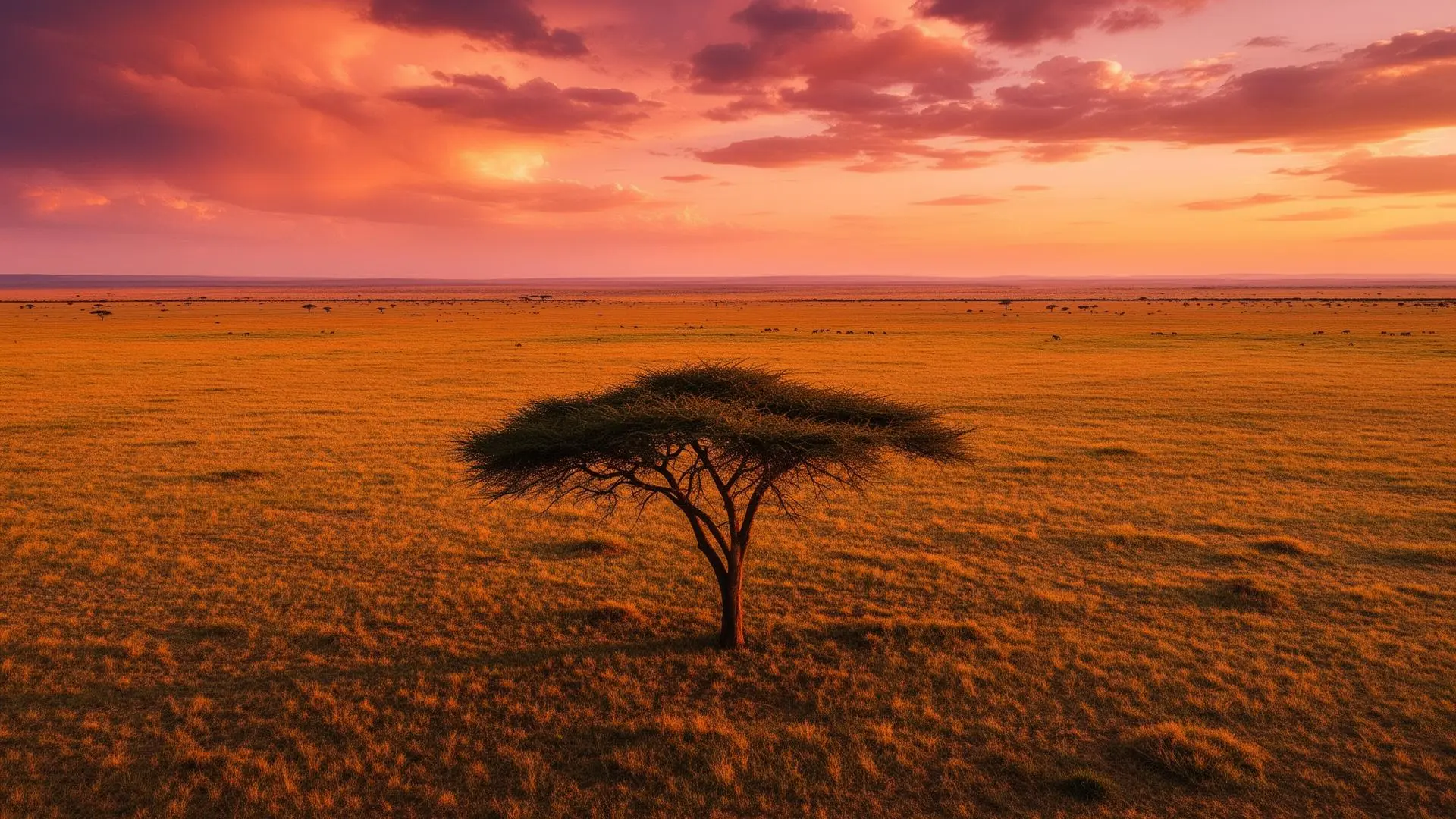
The Great Migration is not a single event but a continuous, circular journey — nearly two million wildebeest, zebras, and gazelles following ancient rainfall patterns across the Serengeti-Mara ecosystem. Understanding its rhythms transforms a safari from wildlife watching into witnessing one of Earth's last great natural phenomena.
January–March: Calving Season in the Southern Serengeti
The migration year begins on the short-grass plains of the southern Serengeti and Ngorongoro Conservation Area. Around 500,000 calves are born during a concentrated three-week period in February — a survival strategy that overwhelms predators with sheer numbers. The nutrient-rich volcanic soils produce grasses that fuel lactation, making this the ideal calving ground. For visitors, this period offers dramatic predator-prey interactions as lions, cheetahs, and hyenas target vulnerable newborns. The flat terrain provides exceptional visibility, and the dense concentration of animals means every game drive is spectacular.
April–May: The Long Rains and the March West
As the long rains begin, the herds start moving northwest through the central Serengeti. The western corridor, with its rivers and woodland, provides the next grazing grounds. This is a less-visited period — the rains are intermittent and the landscape is strikingly green. Crocodile-filled rivers provide the first major water crossing obstacles. Fewer tourists mean lower prices and more intimate experiences. For photographers, the dramatic storm clouds and lush vegetation create extraordinary visual opportunities.
June–July: The Western Corridor and Grumeti Crossings
The herds reach the Grumeti River in June and July, creating the first major river crossing spectacle. Massive Nile crocodiles patrol the waters, and the hesitation of the herds before plunging across creates extraordinary tension. Not every crossing is dramatic — sometimes the animals wade through without incident — but when a large herd commits, the resulting chaos of splashing, bellowing animals and lurking predators is unforgettable. Luxury camps positioned along the Grumeti offer front-row seats.
August–October: The Mara River Crossings
This is the period that has made the Great Migration one of the most filmed wildlife events on Earth. The herds cross from Tanzania's Serengeti into Kenya's Masai Mara, navigating the treacherous Mara River. Crossings can involve thousands of animals surging across at once, with crocodiles striking from below and predators waiting on the banks. The timing is unpredictable — herds may approach the river and turn back multiple times before committing. Patience is essential, but the reward is witnessing raw nature at its most dramatic. The Masai Mara's open grasslands then provide exceptional predator viewing as resident lions and cheetahs take advantage of the abundance.
November–December: The Return South
Following the short rains, the herds begin their return journey south through the eastern Serengeti. The grasses regenerate, pulling the wildebeest back toward the calving grounds. This less-documented phase of the migration offers excellent game viewing with fewer tourists. The herds are scattered across vast areas, creating a sense of immersion in a landscape dominated by wildlife. By late December, the cycle is nearly complete, and the herds are gathering on the southern plains in preparation for another calving season — the great circle continuing as it has for millennia.