
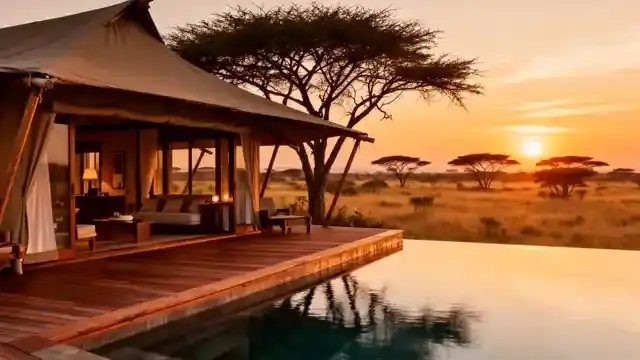
East Africa's luxury hospitality sector has undergone a quiet revolution. Gone are the days when 'luxury safari' meant a pale imitation of European five-star hotels transplanted onto the savanna. Today's finest properties are defining an entirely new paradigm — one rooted in place, community, and an intimate connection to the wild.
Beyond Thread Counts: Redefining Luxury
The most innovative East African properties understand that true luxury isn't about marble lobbies and gold fixtures — it's about experiences impossible to replicate anywhere else. Waking to the sound of a lion's roar. Dining under a canopy of stars while elephants drink at a waterhole twenty metres away. Walking with Maasai warriors through landscapes their families have protected for generations. This experiential luxury attracts a new generation of travellers who value authenticity and meaning over opulence. The properties leading this movement have waiting lists measured in years, not months.
Architecture That Belongs
The best new lodges and camps in East Africa are designed to disappear into their landscapes rather than dominate them. Architects are using local materials — stone, timber, thatch, recycled metals — to create structures that feel organic and site-specific. Many camps are entirely solar-powered with zero permanent footprint: they can be disassembled and the land restored to its natural state. This 'light-touch' philosophy extends to interiors, where handcrafted furniture by local artisans replaces imported luxury brands. The result is spaces that feel authentically African while maintaining the highest international comfort standards.
The Community Luxury Model
A growing number of premium properties operate on community conservancy land, paying lease fees and employing staff from surrounding communities. Ol Donyo Lodge in Kenya, Singita Volcanoes in Rwanda, and Wilderness Safaris properties across East Africa demonstrate that the most exclusive experiences can also be the most socially impactful. Guests at these properties aren't just paying for a room — they're funding conservation, education, and healthcare for thousands of people. This 'luxury with purpose' model is increasingly what discerning travellers demand.
Culinary Innovation on the Savanna
East African luxury cuisine has evolved dramatically. Top chefs now source ingredients hyper-locally — herbs from kitchen gardens, honey from community apiaries, fish from Lake Victoria, and spices from Zanzibar. Multi-course bush dinners featuring Kenyan coffee-rubbed game, Rwandan chilli-glazed tilapia, and Tanzanian chocolate desserts rival anything in Nairobi's or Cape Town's finest restaurants. Wine cellars stocked with South African and increasingly East African vintages complement the experience. Some camps even offer foraging walks with Maasai herbalists, connecting food to land in deeply personal ways.
The Future of East African Luxury
The trajectory is clear: East Africa's luxury hospitality will continue to push boundaries in sustainability, community integration, and experiential design. Upcoming developments include regenerative tourism projects where guest visits actively restore ecosystems, AI-powered wildlife tracking integrated into guest experiences, and multi-property itineraries that combine safari, beach, and cultural immersion into seamless journeys. For travellers seeking luxury that means something, East Africa isn't just competitive with global destinations — it's redefining what luxury means.